
One wearable. A complete picture.
Vitrona adds a continuous, effortless view of everyday wellness — designed around the realities of senior living.
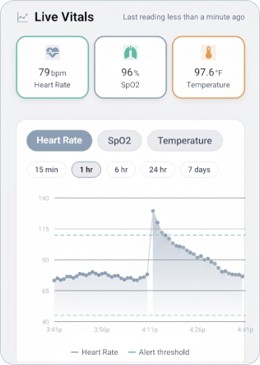
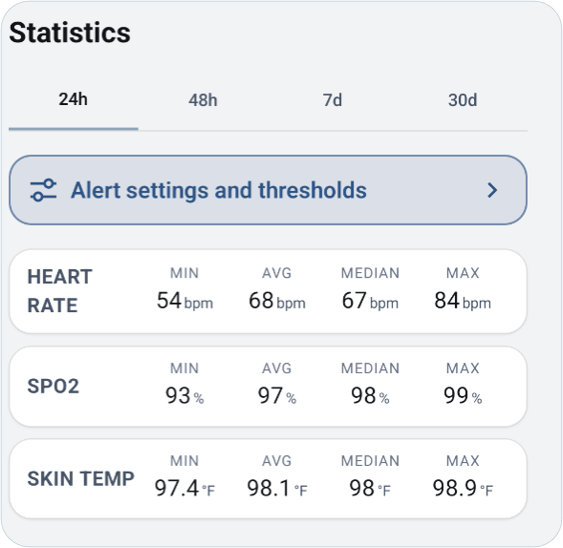
Three signals, tracked around the clock.
Heart rate
Blood oxygen
Skin temperature
Why these three vitals?
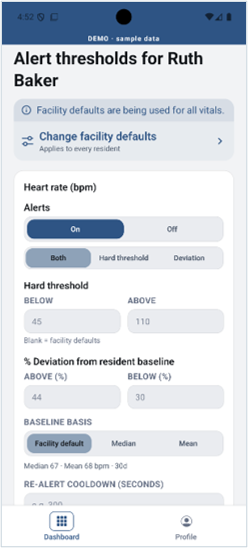
Research links changes in heart rate, temperature and blood oxygen to many of the most common causes of hospital admission for older adults. Vitrona doesn't diagnose anything — it flags that vitals have moved so staff can check in.
| Event | Heart rate | Temperature | Blood oxygen |
|---|---|---|---|
| Heart complications | Rises | No typical change | Falls |
| Infection | Rises | Rises | No typical change |
| Respiratory illness | Rises | No typical change | Falls |
| Viral illness | Rises | No typical change | Falls |
| Heat illness | Rises | Rises | No typical change |
Sources: AARP, Most Common Causes of Hospital Admissions for Older Adults; Mishra et al., Nature Biomedical Engineering, 2020; Wearable technologies to predict heart failure hospitalizations, systematic review, PMC, 2025; Annals of Geriatric Medicine and Research, 2025; Scripps DETECT and Stanford wearables studies.
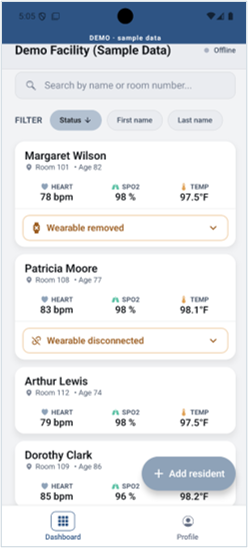
Everything your team needs, in one app.
See Vitrona in your community.
Schedule a 30-minute demo and we'll walk your team through the wearable, the dashboard, and a rollout plan sized to your community.
Schedule a demo